


When someone is diagnosed with a metabolic disorder, they will typically need to follow a lifelong low-protein diet. This specialized diet limits protein intake because, in conditions like phenylketonuria (PKU) or tyrosinemia (TYR), the body cannot properly process certain components of protein. Without this management, harmful substances can accumulate in the body.
To prevent this accumulation, a carefully managed, protein-restricted diet is necessary. This diet primarily consists of special low-protein foods, supplemented with an amino acid formula to ensure the body receives all the other essential amino acids it needs. Adhering to this diet diligently is essential for maintaining good health and preventing serious long-term complications.
On this page you will find more information about:
What does a low-protein diet involve?
How much protein is tolerated?
Why do amino acid preparations belong in a protein-restricted diet?
How is protein intake calculated?
Which sweeteners should you avoid on a low-protein diet?
How to manage the low protein diet?
What does a low-protein diet involve?
For babies with a metabolic disorder, the diet consists mainly of a special metabolic formula, sometimes supplemented with breastfeeding. After the infant phase, the diet continues with their prescribed amino acid formula and expands to include protein-restricted solid foods.
A low-protein diet typically categorizes foods as follows:
"Free" foods
Foods with virtually no protein can often be eaten freely, depending on individual tolerance and age. Examples include certain vegetables and oils, as well as specialty low-protein bread, flour, and pasta. Many special product lines, such as Loprofin*, are available to replace standard high-protein foods.
Weighed foods
Foods that contain small amounts of protein must be carefully weighed or measured. This includes most vegetables, fruits, potatoes, and nuts. These are eaten in precise portions according to the personalized diet plan established by the dietitian.
Note: Vegetables are a necessary source of natural protein and must be carefully measured based on individual tolerance. Fruits are generally low in protein.
Prohibited foods
High-protein foods are typically not allowed. This includes products such as milk, meat, chicken, fish, and eggs.
Example of a low-protein diet
A low-protein diet is indispensable for people with metabolic disorders such as phenylketonuria (PKU) or other amino acid disorders. The goal of this diet is to limit the intake of certain amino acids so that the body does not accumulate them, which can be harmful.
This sample meal plan serves as an example and should always be adapted to the individual needs and medical guidelines of the patient in consultation with the treating dietitian.
Breakfast
- Low-protein bread substitute (e.g., low-protein bread or crackers)
- Thin layer of margarine or plant-based butter
- Toppings: Sugar-free jam or a slice of cucumber/tomato
- Fresh fruit such as a tangerine or a small handful of berries
- Drink: Low-protein drink or fruit juice (no added sugar)
Snack
- Low-protein biscuits or rice cakes
- Fresh fruit or a small handful of unsalted nuts
Lunch
- Low-protein pasta or rice
- Vegetables: Steam or sauté vegetables such as bell peppers, zucchini, or carrots (without added salt or protein-rich sauces)
- Vegetable margarine or a drizzle of olive oil
- Drink: Low-protein drink or tea
Snack
- Low-protein chips or crackers
- Vegetable sticks such as carrot or cucumber with a little hummus (pay attention to the protein content)
Dinner
- Mashed potatoes (made with water or low-protein milk)
- Steamed or grilled vegetables such as broccoli or cauliflower
- Salad with lettuce, tomato, cucumber and a light dressing (no proteins)
- Beverage: Water, tea, or low-protein drink
Evening snack
- A piece of fresh fruit such as a kiwi or peach
How much protein is tolerated?
The amount of protein a person with a metabolic disorder can tolerate varies and depends on how much function the affected enzyme has. If the enzyme is completely absent, protein intake must be very strictly limited. If the enzyme retains some partial function, the dietary restriction may be less strict.
While the underlying enzyme function itself does not change, the amount of protein a person can tolerate can fluctuate throughout their life. This tolerance is influenced by factors like growth, changes in body size, physical activity level, and periods of illness. A dietitian specializing in metabolic disorders regularly monitors key blood levels and adjusts the diet as needed. For this reason, regular monitoring of your blood levels, often via a blood spot test, is essential for managing your condition.
Why are amino acid formulas essential for a protein-restricted diet?
A low-protein diet, by design, leads to a deficiency in essential amino acids. To compensate for this, the diet must be supplemented with a special amino acid formula. These formulas are available in many different types, adapted to a person's age, taste, and preferences. A dietitian can advise which formula is best for you or your child.
You can use different amino acid formulas to customize the diet according to your lifestyle. Varying the flavor, the mixing method, or the type of cup or bottle used can make the drink more appealing. It can sometimes be helpful to switch to a different formula, but this should only be done in consultation with your dietitian.
Three tips for using your amino acid formula:
- Keep it cool: to keep the prepared drink cool when you're on the go, use a cooler bag, an insulated flask, or a thermos, perhaps with an ice pack.
- Timing with meals: for younger children, it's helpful to bring their drink with you when you eat out so they can have it with their meal. If this isn't possible, you can give them a portion before and the rest after eating.
- Taking it to school: encourage your child to bring their amino acid drink to school. This helps them learn to manage their diet in different social situations and become comfortable with eating something different from their peers.
How is protein intake calculated?
A dietitian determines a person's specific nutritional requirements based on several factors, including:
- The amount of natural protein the diet can safely contain, supplemented by a necessary amino acid formula.
- The total number of calories needed per day.
- The required amounts of fats, carbohydrates, vitamins, minerals, and trace elements.
Using this information, the dietitian develops a personalized daily meal plan that also considers personal preferences. This plan serves as a guide for you or your parents to calculate daily protein intake.
Historically, people tracked daily intake by counting phenylalanine (Phe). Today, however, it is much more common and practical to count grams of protein directly—a method taught to both parents and individuals with PKU. This is because nutritional labels list protein content in grams, but do not list the specific amount of Phe.
When reading labels, always pay attention to the serving size for which the nutritional information is provided (e.g., per 100g or per serving).
With the rule of three, you can easily calculate how many grams of protein a serving of a certain product contains.
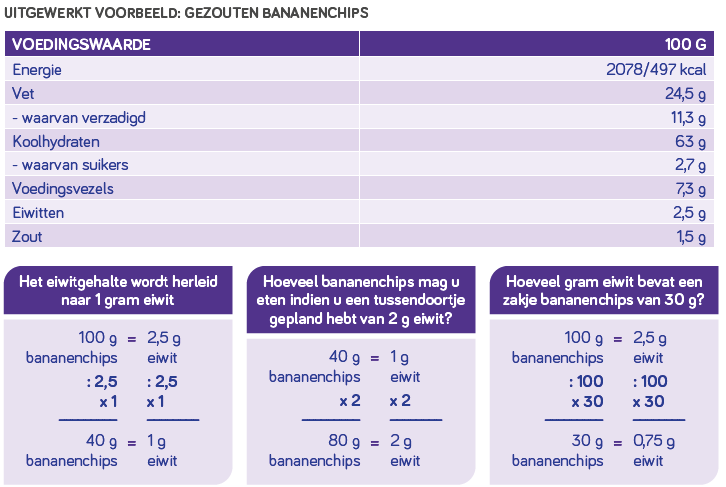
Tip: Use a digital scale and measuring cup to measure everything accurately.
Which sweeteners should you avoid on a low-protein diet?
While many sweeteners are used as low-calorie substitutes for sugar, some contain the amino acid phenylalanine (Phe). For individuals with PKU, these sweeteners must be strictly avoided.
Always check product labels for the following ingredients:
- Aspartame (E-number 951)
- Aspartame-acesulfame salt (E-number 962)
- Advantame (E-number 969)
- Neotame (E-number 961)
- So be sure to check whether these ingredients are listed on the label.
How to manage the low-protein diet
Successfully managing the diet requires three key skills: accurate calculation, forward planning, and creativity. By carefully calculating the protein in each food, you can determine the correct portion sizes for your plan. Good planning helps to avoid surprises and makes it easier to adhere to the diet, allowing for more creativity and variety in your meals.
Tip: To assist with these tasks, there are several smartphone apps available that can help you track your intake and manage your diet. Always consult your dietitian before using these apps.
